- By Admin
- 12 Apr, 2026

SpaceUpp is a workplace governance advisory firm helping Indian organisations build systems that protect, stabilise, and strengthen the workplace.
SpaceUpp is a workplace governance advisory firm helping Indian organisations build systems that protect, stabilise, and strengthen the workplace.

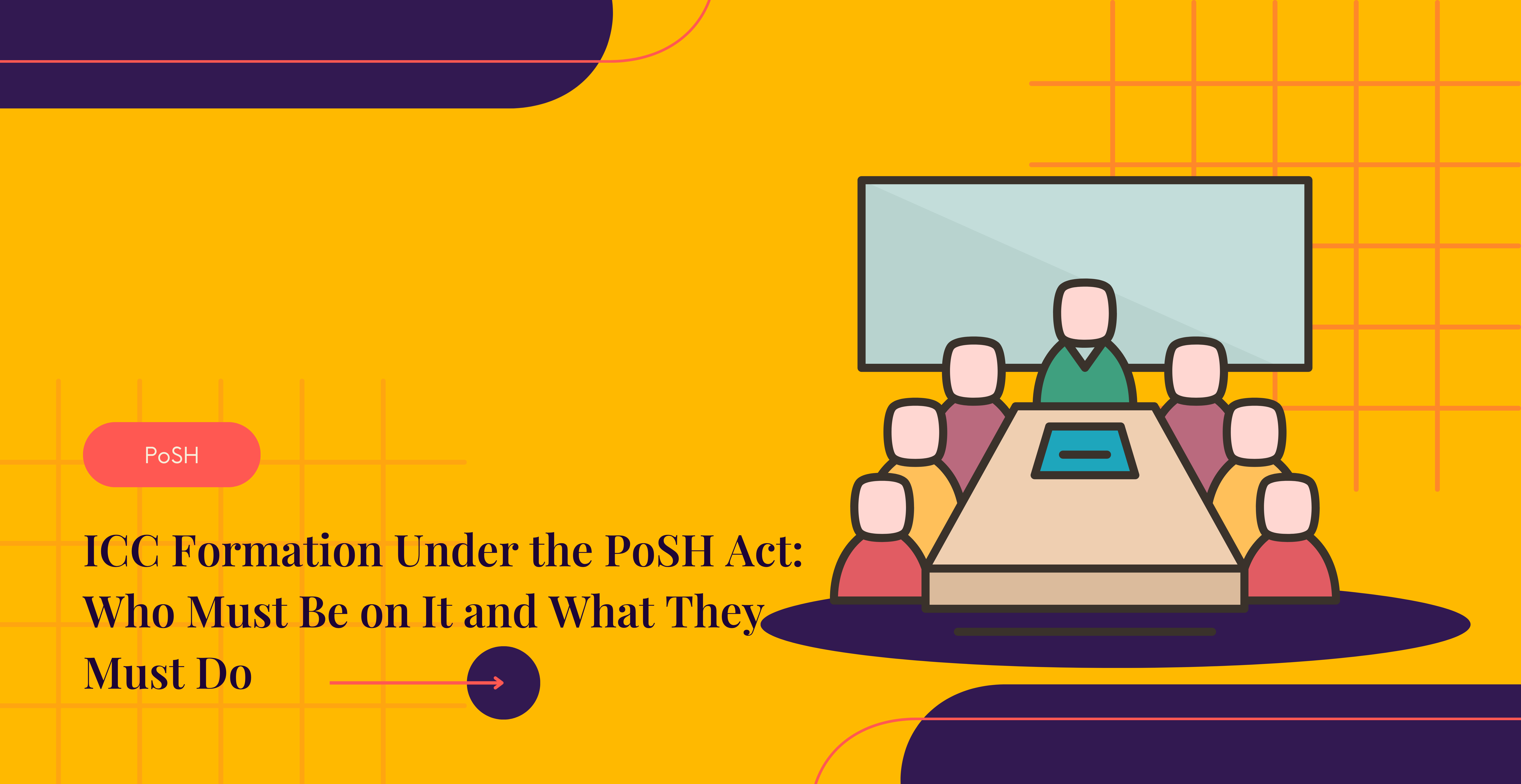
The Internal Complaints Committee is not a formality. Under the Sexual Harassment of Women at Workplace (Prevention, Prohibition and Redressal) Act, 2013, it is the primary mechanism through which every sexual harassment complaint in an organisation is received, investigated, and resolved.
Every organisation with 10 or more employees is legally required to have one. But having an ICC (commonly referred to as the IC) on paper and having a functioning, legally compliant ICC are two different things. The Act specifies exactly who must sit on the committee, what qualifications each member must hold, what each member is responsible for, and what happens when any of those requirements are not met.
Most ICC-related compliance failures in Indian organisations are not failures of intent. They are failures of composition.
The PoSH Act under Section 4 prescribes the composition of the ICC. A compliant committee must have a minimum of four members structured as follows:
Presiding Officer: A woman employed at a senior level at the workplace from amongst the employees. She must be at a senior level relative to other employees, and she must be a woman. If a senior-level woman employee is not available at the particular workplace, the Presiding Officer may be nominated from another office or administrative unit of the same organisation.
Two Internal Members: At least two members from amongst employees, preferably committed to the cause of women, or who have had experience in social work, or have legal knowledge. The Act uses "preferably" here, but organisations that appoint internal members without any of these attributes risk the committee's credibility in an inquiry.
One External Member: A member from amongst non-governmental organisations or associations committed to the cause of women, or a person familiar with issues relating to sexual harassment. This member must have decent experience in social work and must not have any financial, personal or other connection with the organisation appointing them.
The committee must have at least one-half of its total members as women. This is a mandatory requirement, not a recommendation.
The composition of the ICC is not a box-ticking exercise. Every member requirement in the Act exists for a reason — to ensure the committee can conduct a fair, independent, and credible inquiry. A committee that does not meet these requirements cannot legally function as an ICC under the Act.
Of all the ICC composition requirements, the External Member is the one most organisations get wrong.
The most common failure is appointing someone with a personal or professional connection to the organisation — a consultant, a lawyer on retainer, a consulting auditor, a friend of the founder, or a former employee. The Act is explicit: The External Member should be independent and capable of exercising objective judgment. Organisations should avoid appointing individuals whose existing financial, personal or professional relationships may compromise perceived independence.
The second most common failure is appointing someone who does not meet experience threshold. A well-meaning individual without documented experience in social work or issues related to sexual harassment does not qualify under the Act, regardless of their seniority or reputation.
An ICC with a non-compliant External Member is, in practice, non-compliant. Any complaint handled by such a committee, and any outcome it produces, is legally vulnerable.
Forming the ICC is step one. The committee's legal obligations begin immediately after formation.
The Presiding Officer is responsible for leading the inquiry process, ensuring procedural fairness, managing timelines under the Act, and signing off on the inquiry report. The Presiding Officer also plays a role in ensuring that both the complainant and the respondent are informed of the process and their rights.
Internal Members participate in the inquiry, review evidence, interview parties and witnesses, and contribute to the inquiry findings. They are bound by strict confidentiality obligations under Section 16 of the Act. Breaching confidentiality is a punishable offence under the PoSH Act.
The External Member brings independent oversight to the inquiry. The external perspective is what prevents the inquiry from being influenced by internal power dynamics, seniority considerations, or organisational relationships.
All members are required to complete capacity-building training. The Act does not prescribe a specific format, but an untrained ICC member, particularly one handling an inquiry, is both a legal risk and a fairness risk.
An ICC can be constituted and still be non-compliant. The following gaps are the most common reasons an ICC fails a legal challenge or a regulatory audit:
● The Presiding Officer is not a woman or not at a senior level relative to other employees
● The External Member has a professional or personal connection to the organisation
● The External Member does not have documented relevant experience
● The committee does not have at least half women members
● Members have not been formally appointed through a written order
● The ICC has not been reconstituted after a member's term expired (members serve a maximum of three years per term)
● No training has been conducted for ICC members
A non-compliant ICC does not just create legal exposure for the organisation. It fails the people who bring complaints to it. An inquiry conducted by a defective committee is an inquiry that can be challenged, overturned, or used as evidence of the organisation's failure to take complaints seriously.
Forming the ICC is not the end of the compliance obligation. After constitution, the following steps must be completed:
● Issue formal appointment letters to all ICC members
● Display the names and contact details of ICC members in a prominent location in the workplace, including on any digital or remote working platforms
● Conduct an orientation or capacity-building session for all members
● Register the ICC details on the She-Box portal, which became an important compliance expectation.
● Set a calendar for annual review of membership, term expiry, and reappointment
● File the ICC's annual report with the employer and the relevant District Officer by January 31 each year
The PoSH Act does not allow for wholesale dissolution of the ICC. It is a permanent standing body, not a committee constituted per complaint. What the Act does provide for is removal of individual members on four specific grounds under Section 4:
● The member discloses confidential information — complaint details, complainant or respondent identity, witness details, inquiry proceedings, or ICC recommendations
● The member has been convicted under any law, or an inquiry under any law is pending against them
● The member has been found guilty in disciplinary proceedings, or disciplinary proceedings are pending against them
● The member has abused their position in a manner prejudicial to public interest
When any of these grounds apply, the employer is required to remove the member and fill the vacancy immediately through fresh nomination. This is not optional. An ICC with an unfilled vacancy cannot legally function. Any inquiry conducted by an improperly constituted committee, whether due to a vacancy, a disqualified member still sitting, or a non-compliant composition, is legally vulnerable to challenge and can be overturned entirely.
Courts have been consistent on this point. The Rajasthan High Court in Shital Prasad Sharma vs State of Rajasthan (2018) held that the Presiding Officer cannot be removed mid-term except on the prescribed statutory grounds. The Delhi High Court, in Linda Eastwood vs Union of India, held that a reconstituted committee, operating with bias, rendered the entire investigation unsustainable.
The practical implication for employers is straightforward: member terms, conduct, and eligibility must be monitored continuously, not just at the point of formation. An ICC that was compliant at its constitution can become non-compliant without the employer noticing, and the cost of discovering that during an active inquiry is significantly higher than the cost of regular oversight.
The most important shift in how organisations think about the ICC is this: it is not a group of people appointed to handle complaints. It is a governance system designed to ensure that every complaint is handled fairly, independently, consistently, and within the law.
When it is properly constituted and trained, it protects the organisation, the complainant, and the respondent simultaneously. When it is not, it fails all three.
Most organisations discover the gaps in their ICC at the worst possible time — when a complaint has already been filed. The cost of fixing composition errors under pressure is significantly higher than the cost of getting it right at the start.
Check the ICC's Compliance Status
A free PoSH audit call maps the current ICC composition against the Act's requirements — member qualifications, term status, training records, and filing history. It takes 30 minutes and identifies exactly what is in place and what needs attention.
Book a Free PoSH Audit